



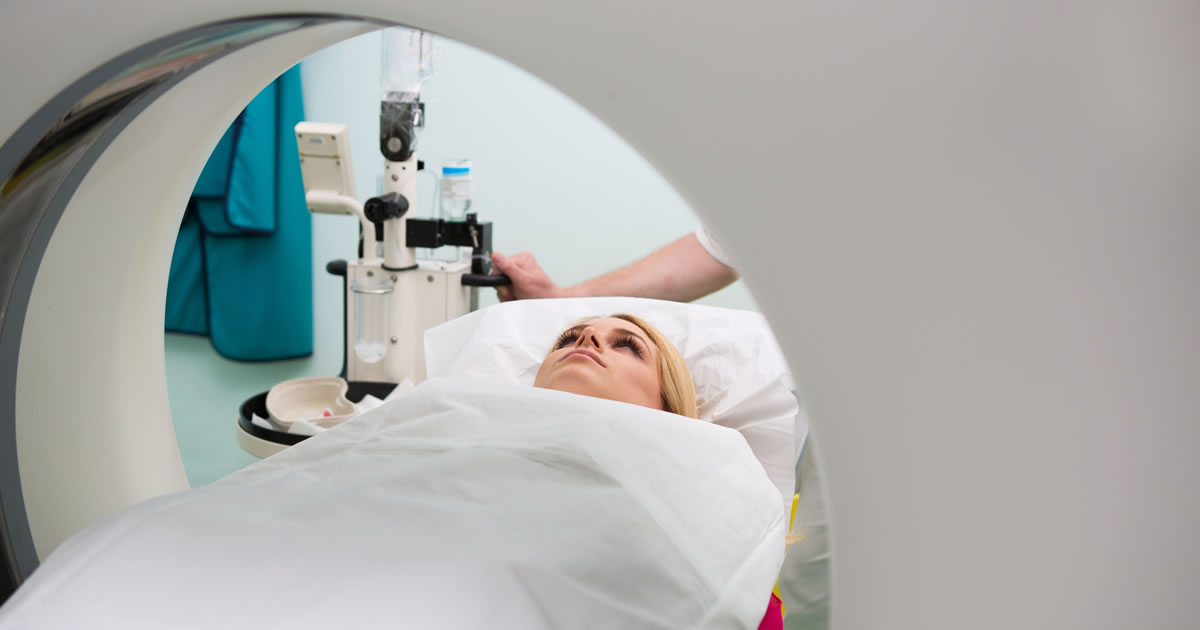
Whole-body imaging as a cancer screening modality is a growing trend—one the medical community is still evaluating
It’s well known that diagnosing cancer at its earliest stages will lead to more successful treatments and outcomes. When symptoms arise, a combination of patient consultation and appropriate testing is a standard approach.
In the quest to catch the disease sooner, full-body scans with magnetic resonance imaging (MRI) and computed tomography (CT) are becoming popular. While it’s an admirable pursuit, medical experts aren’t sold on it. False positive and negative results, harmful radiation exposure, unnecessary follow-up testing, and cost are among the worries.
Dr. Jon Du Bois of Jupiter Medical Center is among the hesitant adopters. For him, the concern boils down to the imaging technology itself that can fall short on sensitivity in pinpointing some cancers, such as a small lesion in the pancreas. “As an oncologist, I would say CT scans and MRI scans—and positron emission tomography (PET) scans—have yet to be proven to meet the definition of a useful cancer screening test, that being a test that finds cancer early and reduces the chance that someone will die from that cancer.”
Pricey, Out-of-Pocket Procedures
Full-body MRI scans are being promoted by companies such as Prenuvo and Ezra. Both have raised tens of millions of dollars to grow their footprints, according to their websites. The diagnostic approach has been endorsed by celebrities including Kim Kardashian and Paris Hilton. Prenuvo, with nearly 20 centers across the country, checks for solid tumors, autoimmune and metabolic disorders (fatty liver, for example), brain aneurysms, spinal issues, and non-cancerous conditions such as cysts and abscesses. The 60-minute screening costs up to $4,500 in the U.S. (depending on the location), which comes out of the patient’s pocket.
That is telling for Du Bois. “Why aren’t insurance companies eager to pay for these imaging tests? They have yet to pass the litmus test for any effective screening where you’re not just finding something, but finding it earlier enough to make a real difference in outcome,” he says.
Insurers often take their cues from the United States Preventive Services Task Force, an independent panel of national experts “devoted to improving the health of people nationwide by making evidenced-based recommendations of effective ways to prevent disease and prolong life.” The group, appointed by the U.S. Department of Health and Human Services, has not weighed in on whole-body imaging.
A University of Michigan radiologist who has studied the trend says that nearly 15 to 30 percent of all diagnostic imaging turns up at least one discovery not initially sought, which can be problematic. “New whole-body scans are scans that seek out incidental findings, which make the results seem more alarming,” Dr. Matthew Davenport reported in a 2023 paper that explored the harms of imaging on low-risk patients. “Those findings often don’t require treatment as they aren’t serious. But when patients seek to maximize the diagnosis through oncologists or other specialists, the costs and time multiply. [That] can result in emotional and physical harm” from further invasive testing.
Unnecessary Radiation Exposure
The same goes for whole-body CT scans, which add the element of low-dose radiation exposure to the risk. The procedure costs about the same as an MRI but is quicker.
Both Du Bois and Davenport agree that exploratory scans are appropriate for patients who have a documented high risk of certain cancers. Screenings like pap smears, mammograms, and colonoscopies are covered by insurers because they're proven to make a difference in survival.
CT and MRI technology might improve over time, Du Bois says, but he’s more interested in the promising and rapidly expanding field of molecular testing. It’s a “laboratory method that uses a sample of tissue, blood, or other body fluid to check for certain genes, proteins, or other molecules that may be a sign of a disease or condition,” according to the National Cancer Institute. “Molecular testing can also be used to check for certain changes in a gene or chromosome that may increase a person’s risk of developing cancer or other diseases.”
These tests hold the promise of cancer detection years prior to identification on an imaging study.
Du Bois notes that “early detection via molecular testing is extremely appealing. These tests literally look for molecular evidence of cancer, including cell-free DNA floating around in the bloodstream."